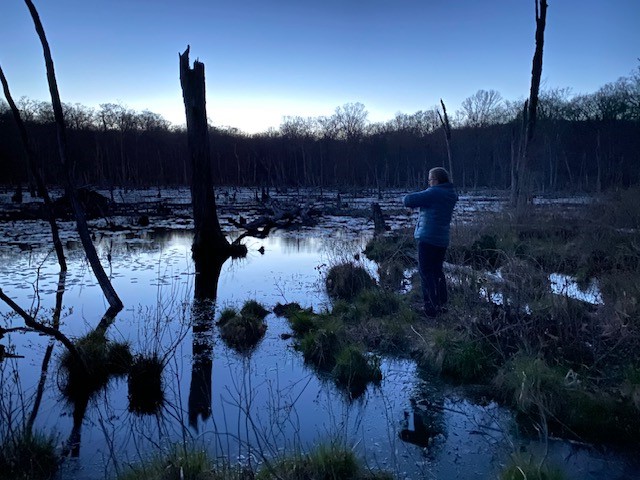
I became intrigued with frogs in February of 2018 after a FrogWatch training session to become a Citizen Scientist. A friend and I got in the habit of a weekly evening hike / frog listening session. It was a blissful way to end the day. (Photo at right — my FrogWatch listening buddy at our secret listening spot).
In the spring of 2020, my obsession with frogs turned from listening to them to photographing them. To de-stress during the Covid-19 pandemic my family and I would take a daily walk to our favorite wetlands to look for frogs. I became preoccupied with taking slo-mo videos of them leaping into the water.
In past columns I wrote about hikes where you could look for frogs and salamanders, but these were published in April when spring was already in full swing. It seems odd to be writing this for my February post. However, I checked the Frogwatch education sessions for 2024 and realized if I waited, it would be too late for interested readers to get their Citizen Scientist training.
There are two sessions being offered through the Beardsley Zoo this year. All trainings are held from 7:00-8:30pm and are free with suggested donation. A Virtual Training on Feb. 7, 2024; and either Virtual or in-person at the Zoo on March 4, 2024. Click HERE for more information and to register.
Another option for FrogWatch training is through the Connecticut Audubon Society, which is offering a Virtual Training session on Wednesday, February 28 from 6-7:30 p.m. in partnership with Mystic Aquarium. Click HERE for more information and to register. FrogWatch USA is a national program, so if you are outside Connecticut, you can search for training sessions in your area.
For those of you who are interested in learning more about the 10 frogs and toads found in CT without going through the FrogWatch training, I list a number of resources and websites in my bibliography.
Once you have educated yourself about Connecticut’s frogs and toads, where can you go looking for them? Since virtually all frogs and toads require some type of aquatic habitat, at least for mating, the first thing to do is look for water – specifically wetlands, vernal pools (seasonal bodies of water that dry up for part of the year), swamps and ponds. In February, you’ll be doing this mostly with your eyes.
To do this, I pore over trail maps for public lands and look for clues such as markings for wetlands or small ponds. Some maps will even label vernal pools. I open Google Maps and look for indications of ponds. I search the Internet using search terms such as “Connecticut trails vernal pools” to come up with suggestions. When I am out on a hike I keep my eyes open for wetlands and pools of water and make a note of their locations so that I can come back at a later date.
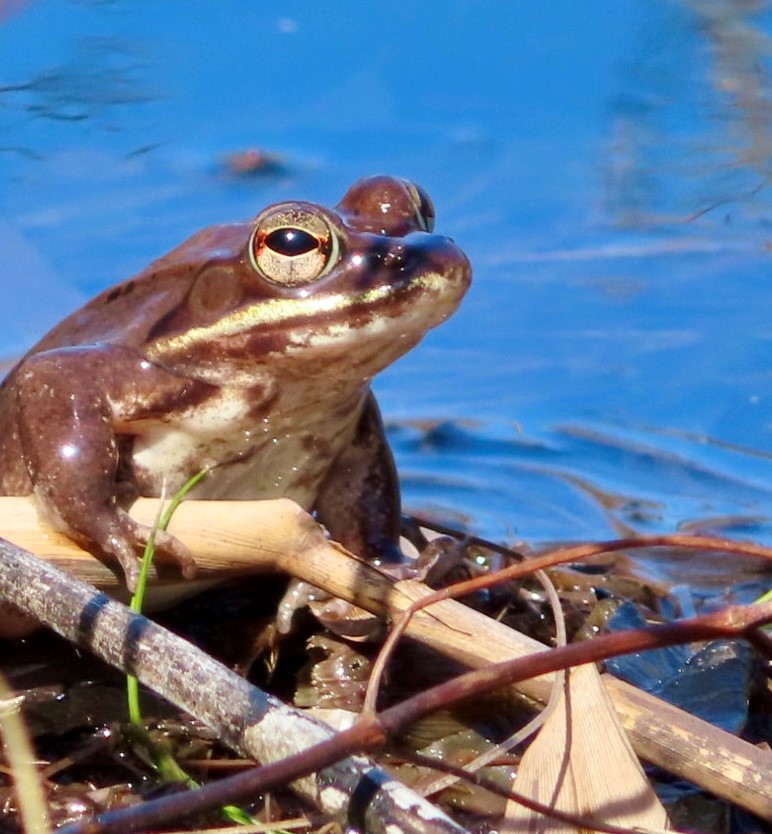
Once March rolls around, I can start to employ my ears, listening for the telltale sound of frogs calling for a mate. Most people are familiar with the deafening sound of spring peepers, but one of my favorites to listen for is the wood frog, which sounds like a quacking duck and is much easier to see and photograph than a tiny peeper (photo to left is a wood frog). When I am out hiking and I hear their calls it acts like a magnet, and I eagerly go off trail in search of the source. (NOTE: Please familiarize yourself with the rules and regulations for the land you are traversing, and respect requests to stay on trails where noted). Like me, you will probably find a few favorite places, and then hold that information close. However, in the interest of camaraderie, I will share some places with you that I know publicly advertise the presence of amphibians.
THE PRESERVE, Essex, Old Saybrook and Westbrook.
The Preserve is an ideal spot for amphibian viewing. According to the website, along with general wetlands and swamps, the property has “38 highly productive vernal pools” and “is home to 25 species of amphibians and reptiles”. I also say this from personal experience: in April of 2022 I attended an amphibian walk with herpetologist Dennis Quinn, who among other things created and maintains the Connecticut Herpetology website, and founded Quinn Ecological LLC that focuses on reptile and amphibian research, conservation and preservation. During our hike Dennis and his student team delighted the group by finding 6 different species of salamanders, 3 different species of snakes, and several frogs, educating us about some of their characteristics and differences.
There are many trails in the Preserve. The one I describe below is just one option. Click HERE for the Trail Map. Please note that as of this writing the latest map is out-of-date, at least with regards to parking. There is a new parking lot in Old Saybrook on the right hand side of Ingham Hill Road before the old parking area. It is large and accommodates many vehicles. (Google Maps still goes to the old Parking area, which is now just for emergency vehicles, so watch carefully for the newer lot).
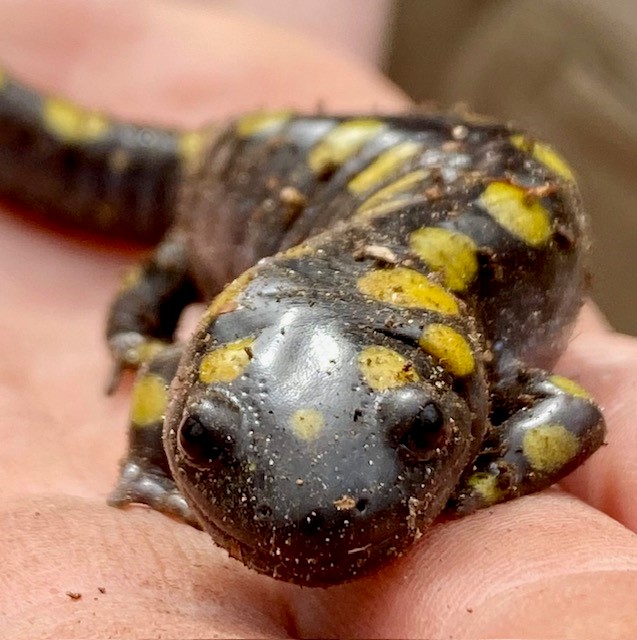
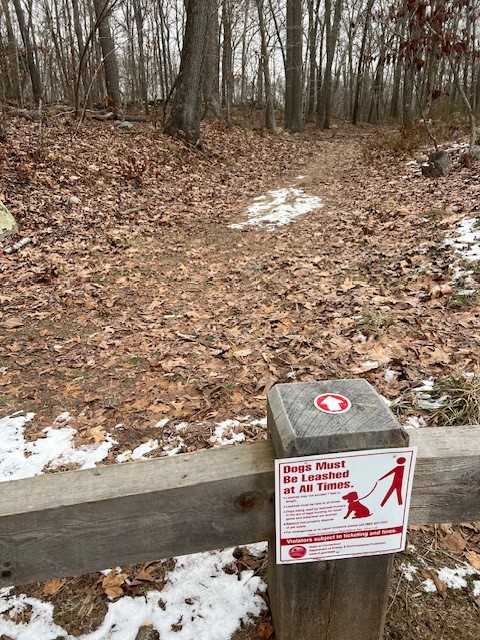
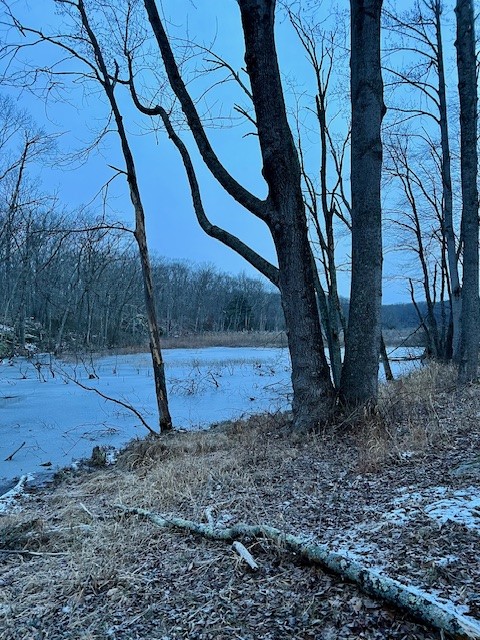
From left to right: a yellow spotted salamander from the Amphibian Walk with Dennis Quinn; the start of the red trail at the rear of the Old Saybrook parking lot; Pequot Swamp Pond in early January.
Pequot Swamp Pond Loop Trail, 3.2 miles. In January of 2024 a friend and I parked in the Old Saybrook lot and hiked a clockwise loop. We walked along the road to the trailhead on the right, following the blue trail a short distance before taking a left on the red trail. The red trail is a wide cart path that is the old road past the former Ingham homestead. It passes by the edges of Pequot Swamp Pond where you can watch for turtles sunning themselves on logs as the weather gets warmer, and look for frogs. As you continue along the red trail you will pass streams and vernal pools that by mid-March be alive with salamanders and frogs. As you pass across the power line corridor, you may find snakes in the warmer months soaking up the sun. Where the red trail forks we stayed to the right, then continued to green then blue, doing a wide circle. On the blue trail, watch for an unmarked trail to your right that leads to an overlook of Pequot Swamp Pond. When we got back to the junction with the red trail, we discovered a new connector to the parking lot, which allowed us to avoid the road walk. This trail is well marked in the field, but is not shown on the map. NOTE: There are 2 different parking lots on Ingham Hill Road in Essex as well as the one on Ingham Hill Road in Old Saybrook, but Ingham Hill Road does NOT connect between the two towns so be careful if you are using GPS that it is taking you to the right place.
In total, The Preserve has 963 acres owned in combination by the State of Connecticut, the Town of Old Saybrook and the Essex Land Trust. For more information, click HERE.

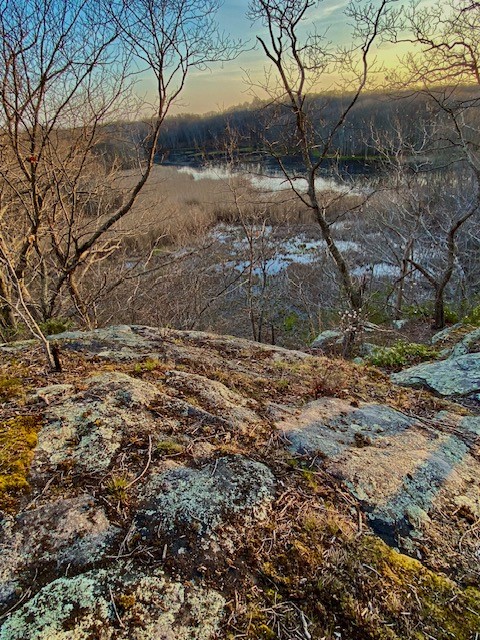
The scenic viewpoint on the blue trail overlooking Pequot Swamp Pond in January of 2024 (left) and April of 2022 (right).
ROCKLAND PRESERVE, Madison.
Rockland Preserve can seem overwhelming with the number of different hiking and mountain biking trails and trail connectors to multiple other properties. A good place to start is the one mile white loop trail around Coan Pond. According to the town website, Coan Pond is “[p]art pond and part fen, the area is a mixture of bog with black, damp soil and rare flowers as well as pond with frogs, turtles and beaver…The small pond at the edge of Coan Pond harbors water lilies, frogs and turtles.”
The parking for this trail is a lot at the end of the Renee’s Way cul-de-sac in North Madison (not named for me, but a girl can dream!) From the parking lot, I walked around the yellow gate at the back and followed the white trail blazes, keeping to the right to do a counter-clockwise loop of the pond. The trail winds along gently up and down with views of the pond through the bare trees from different vantage points. As I reached the northern end of the pond, I happily stumbled upon a new Pollinator Pathway garden with a plaque denoting the dedication in 2022. There were small signs marking various plants (this was mid-January, so except for the Christmas fern there was little to see plant-wise). There was a wooden box on a pole and inside were trail maps, a guest book and a binder describing the various plants present in the pathway garden and within the Rockland Preserve in general (another area I have devoted space to is the Wildflower Preserve trail within Rockland). Continuing along the path, I became confused by the presence of purple trail blazes that appeared along with the white. These had actually been present at the very start of my hike but I had ignored them. When I finished my hike, I saw that the parking lot kiosk explains that the purple blazes are the trail markers for the new Pollinator Pathway Garden. This was a good reminder to always check the kiosk, even if you are familiar with a property, as you never know when it will have new information.
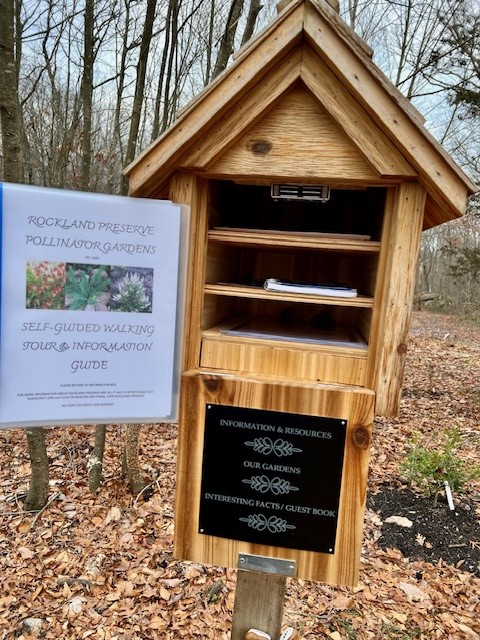
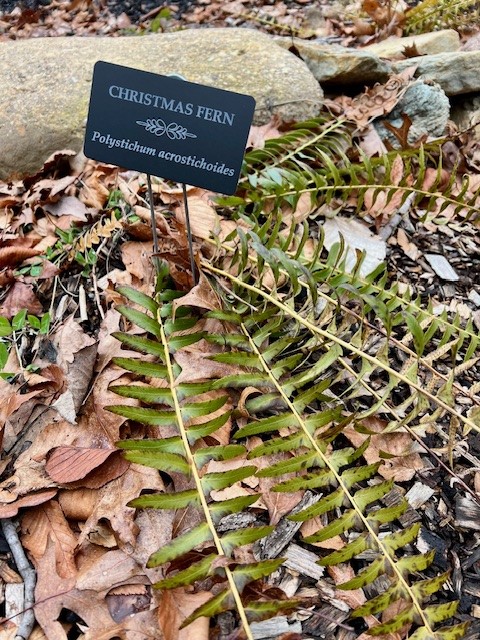
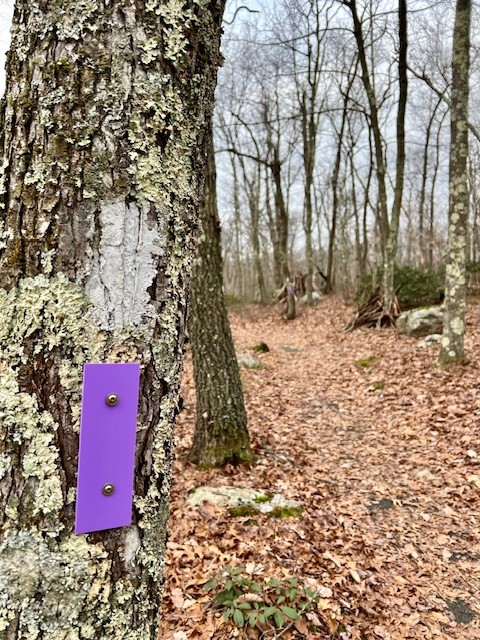
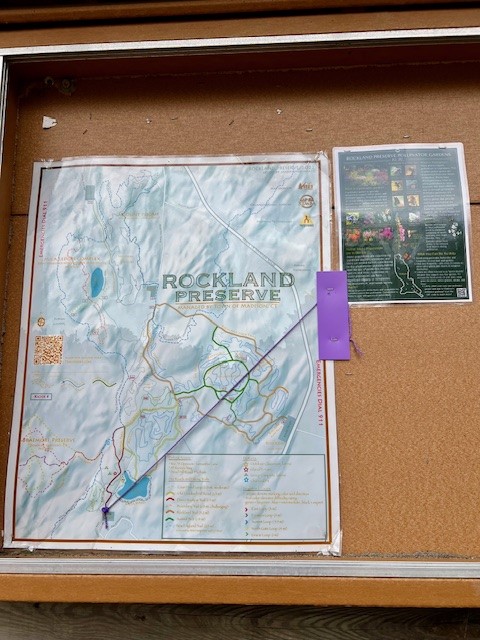
from left to right: the Pollinator Pathway education box; a Christmas Fern; Purple and white blazes on a tree; the parking lot kiosk explaining the new trail.
As you continue around the pond, you will come across the “Nature’s Classroom” – an area with benches and a lectern, and a couple of old picnic tables with a scenic view of the pond. Later on, the trail skirts a viewing platform, which offers good views of the pond year-round.

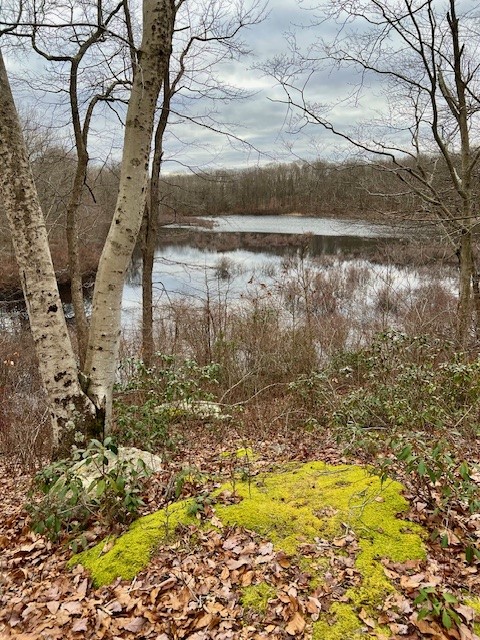

from left to right: Nature’s Classroom; the view from the “classroom”; the viewing platform.
I chose to extend my hike, so after crossing the bridge by the beaver dam, instead of taking the route back to the lot I made my way over to the giant glacial erratic visible from the trail junction. From there, I continued on the path to the left of the erratic, then took a trail marked both blue and blue/red. I stayed to the right where the trail dead ends into another cart path and followed the signs to the Colliers chimney and hut remains. From there I looped back on the red trail and finished on white/purple for a total of 2.25 miles (there are two options as the red trail is also partly a loop trail.)
Click HERE for the various Guides and Maps of the Preserve on the Town website. For the most recent trail map click HERE. This latest map does not show the purple trail.
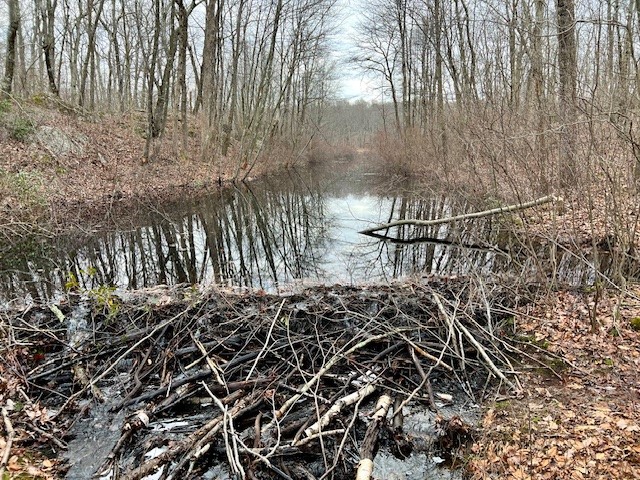

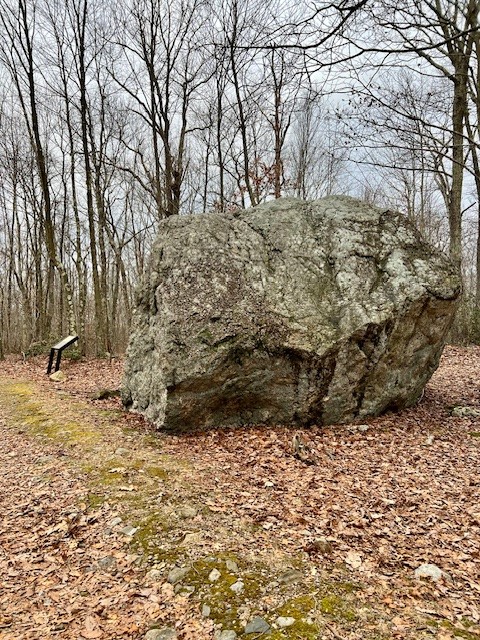
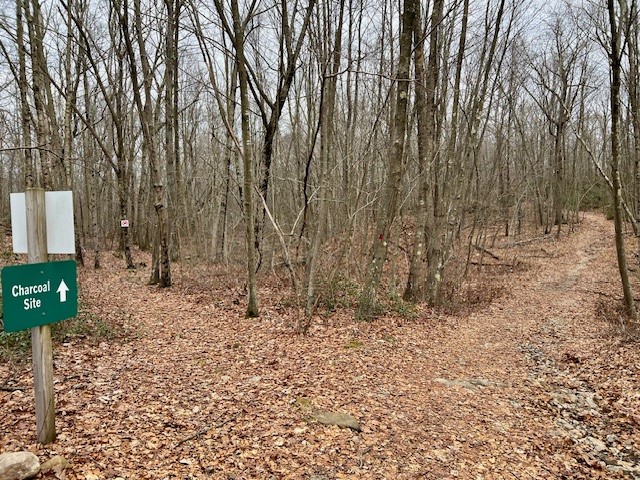
from left to right: the beaver dam along the north side of the pond; the bridge by the dam; the large glacial erratic; facing north – the two paths of the red trail loop. Both will take you to the charcoal site.
OTHER TRAIL IDEAS
Another great resource for vernal pool walks is the non-profit organization Everyone Outside. As their website explains, “Everyone Outside’s mission is to guide people to cultivate a deeper relationship with the natural world near where they live.” I have done a limited amount of volunteer work for EO and attended a few of their events, and they do an impressive job attending to that mission. Check out their VERNAL POOL PAGE which has detailed information about 4 different vernal pool walks in the Middletown area.
SOME ADDITIONAL FROG PHOTOS
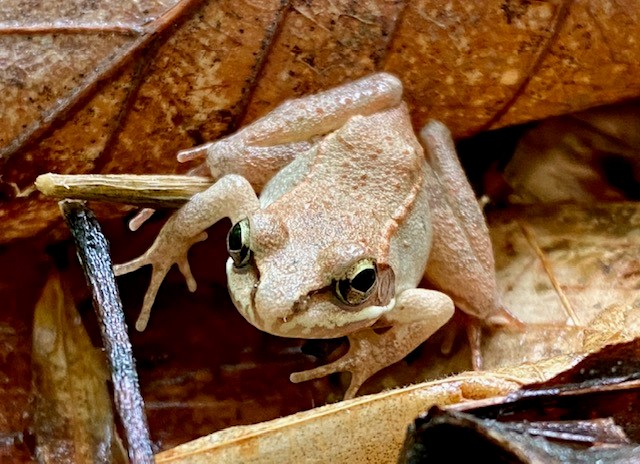
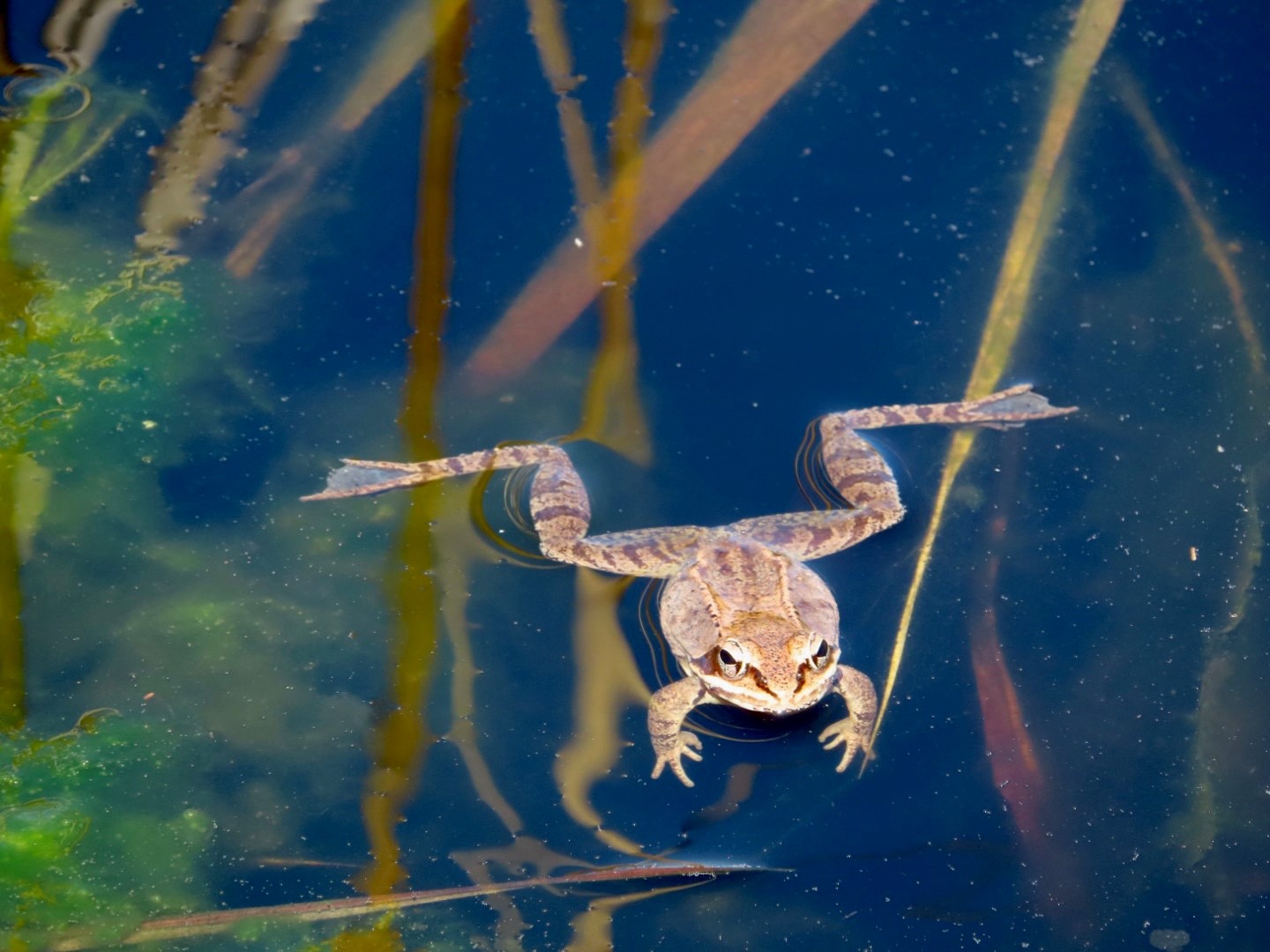
Above left: wood frog on land, its regular habitat; Above right: wood frog in aquatic environment for mating

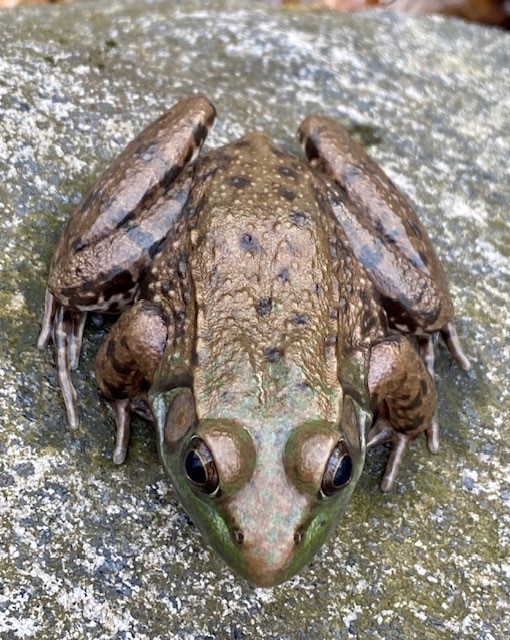
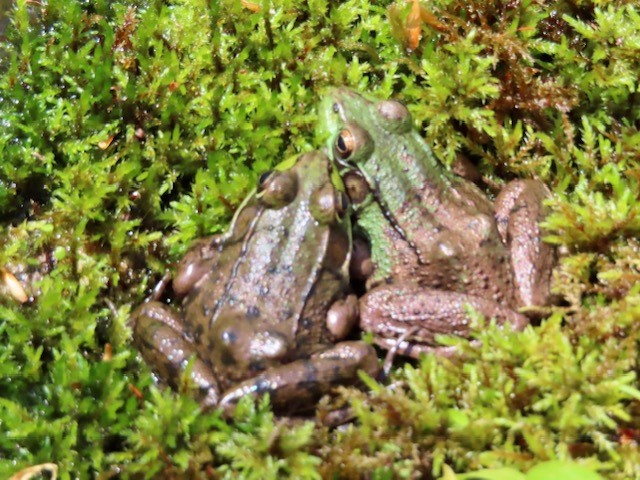
Green frogs from left to right: hiding under a leaf; a frog on a very cold April day that sat perfectly still for a photo shoot from every angle — it seemed literally frozen in place, so when we passed by later and it was gone we figured it either finally was able to move, or got eaten; my favorite frogs from Covid times — we binge-watched all 6 seasons of Downton Abbey and named these ones Mr. Carson and Mrs. Hughes.
BIBLIOGRAPHY
Conservation of Amphibians and Reptiles in Connecticut, co-authored by Michael Klemens, Hank Gruner, Eric Davison and Dennis Quinn. Available for purchase at HERE
https://www.ctherpetology.com/ Dennis Quinn’s website which provides “a Photographic Atlas for the identification of Connecticut’s Amphibians and Reptiles”
https://naturalistguides.com/connecticut-frog-and-toad-sounds/ The Naturalist Guides website has a page with information about the sounds of Connecticut’s frogs and toads.
Want to test your new found knowledge? Take this FROG QUIZ https://www.pwrc.usgs.gov/frogquiz/. I do this every year as a refresher before going out to do my frog listening. You can practice listening to frog calls HERE before you take the quiz.
Resources available at the Killingworth Library
Between Land and Water: Life Stories of Connecticut Amphibians. This DVD will introduce you to all the frogs and salamanders that we have in our state.
A Field Guide to the Animals of Vernal Pools, by Leo P. Kenney and Matthew R. Byrne.
Discovering Amphibians: Frogs and Salamanders of the Northeast, by John Himmelman. Along with illustrations, this book goes into greater depth about the history and lives of these creatures.
Subscribe to Trail Talk
your next adventure awaits
Questions? Email me at naturenerdsramble@gmail.com or find me on Instagram @the_real_nature_renee.
 Subscribe to Trail Talk